
The Importance Of Diversification In Your Portfolio
Building a well-rounded investment portfolio has always been a focus of mine, especially after some lessons learned early in my investing adventure. Since the markets can swing unexpectedly, spreading my investments has helped me handle surprises and sleep more soundly at night. This strategy is called diversification, and I have found it to be one of the simplest yet most reliable approaches to managing investment risk and aiming for consistent long-term results.
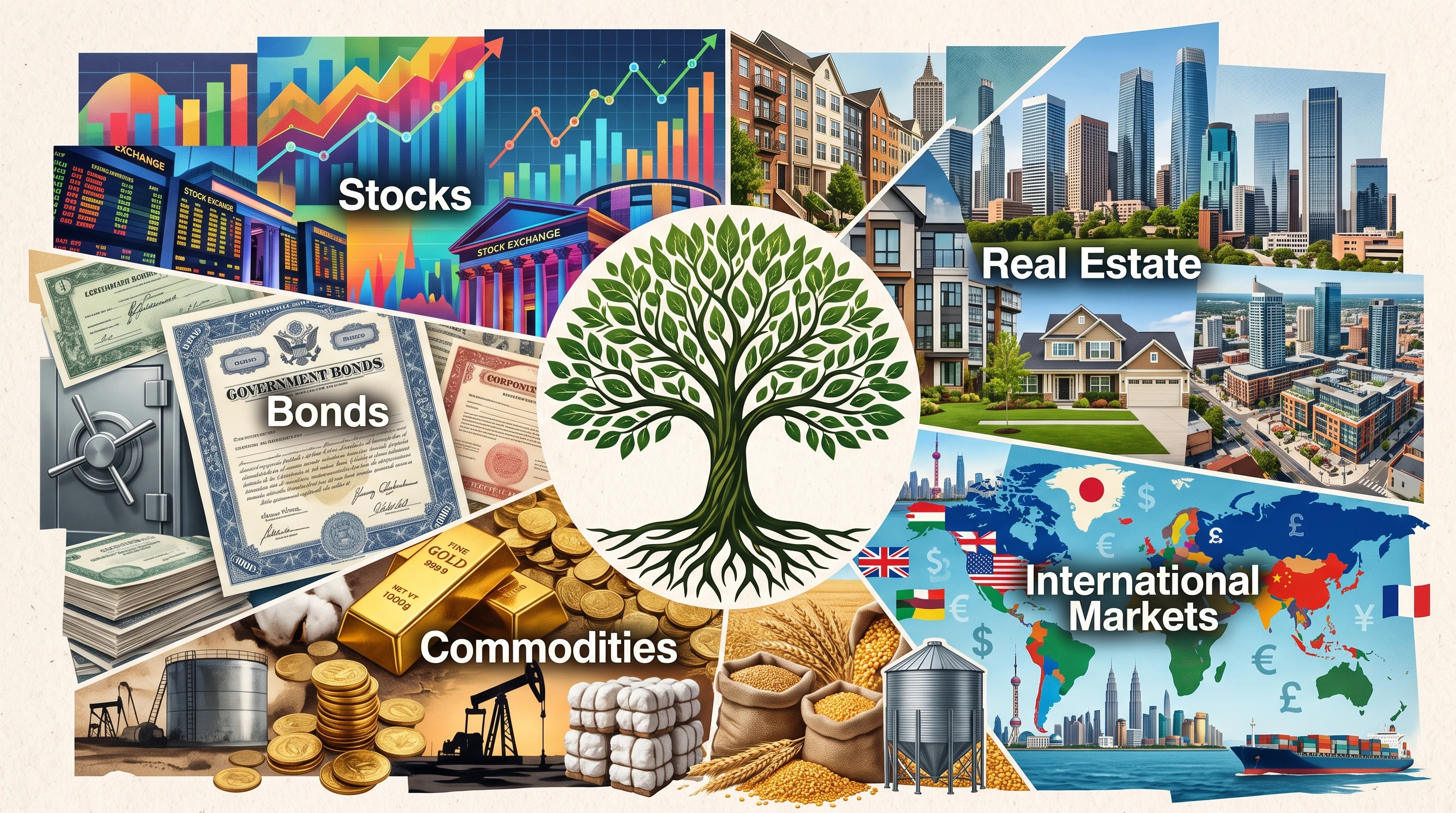
What Is Diversification and Why Does It Matter?
Diversification means spreading investments across different assets to limit the impact of any single loss. The basic idea is “don’t put all your eggs in one basket.” By holding a mix of assets that react differently to economic events, I reduce the chance that one mistake or an unpredictable event will ruin my financial progress.
My main goal with diversification is not to chase quick wins. Putting money in different kinds of investments helps reduce unpredictable, company-specific risks (known as unsystematic risk), smooth out returns, and build a steady track record over the years. Diversification does not remove all risk; specifically, it won’t protect me from market-wide shocks like recessions, wars, or inflation, but it does make setbacks less painful and less frequent.
Types of Diversification for a Balanced Portfolio
When building my portfolio, I focus on more than just picking different stocks. To really make diversification work for me, I look at a range of ways to spread out risk:
- Across Asset Classes: I aim to balance my money between stocks, bonds, cash, real estate (or REITs), commodities like gold, and sometimes other investments. Each has its own risk and reward profile.
- Geographical Diversification: Investing beyond my own country, including developed international and emerging markets, helps me avoid being too tied to one country’s fortunes.
- By Business Sector: I don’t just focus on technology. I include healthcare, financials, energy, utilities, consumer staples, industrials, and communications to avoid being wiped out if one sector hits a rough patch.
- By Company Size: Including large-cap, mid-cap, and small-cap companies adds different levels of stability and growth potential to my portfolio.
- Investment Style: A mix of growth-focused, value-driven, and blend investments gives me both momentum and bargains.
- Over Time: I commit to steady investing; buying regularly over years, regardless of what the market is doing. This practice is known as dollar-cost averaging and keeps me from making emotional decisions.
Putting these together helps me create a much more resilient portfolio that can weather a variety of market changes.
Understanding Correlation and Its Role in Diversification
One concept that really helped me get a handle on diversification is correlation. Correlation measures how different investments move compared to each other. If two assets go up or down together, they have a high correlation. If they often move in opposite directions, they have a low or even negative correlation.
By combining assets that don’t always move the same way, my portfolio becomes less jumpy when markets swing. If one area falls, gains elsewhere can help balance things out, which makes my investment ride a lot smoother.
The Benefits Diversification Brings
I’ve found a few reasons why keeping a diverse portfolio has real payoffs:
- Lowers Volatility: My returns don’t swing wildly up and down as much.
- Reduces the Risk of Catastrophic Loss: A single bad company or sector doesn’t have the power to wipe out my savings.
- Improves Consistency: Returns even out over time, which really helps with financial planning.
- Supports Emotional Discipline: I avoid panicking and selling at the worst possible moment because the whole portfolio rarely crashes at once.
- Keeps Me Invested During Downturns: With fewer painful drops, I’m more likely to stick with my plan and see longterm benefits.
If you want a deeper look at building emotional resilience as an investor, check out my guide on staying calm during market volatility (coming soon).
What Diversification Can’t Do
Diversification is powerful, but it can’t solve every problem. Even with a wide mix of investments, I still face systematic risks; like recessions, spikes in inflation, geopolitical conflict, and broad sel-loffs. These affect almost all assets, and no strategy can make a portfolio fully immune to them.
Understanding this reality keeps my expectations realistic and reminds me not to blame diversification when markets as a whole are down.
How to Build a Diversified Portfolio
I’ve developed a process to make diversification practical without becoming overwhelming:
- Start with broad funds: I choose index funds and ETFs that give me immediate exposure to hundreds or even thousands of companies across different industries and countries, all with low fees.
- Mix asset classes: I balance stocks, bonds, REITs, and maybe even a slice of commodities or alternatives.
- Rebalance regularly: Usually once a year or if certain holdings get too large, I adjust so I’m not unintentionally taking on more risk than I want.
- Adjust as I age: Early on, I leaned more into stocks for growth. As I get closer to retirement, I slowly increase the share of bonds and other more stable assets.
This straightforward approach helps me keep things simple but powerful. Detailed advice on which index funds and ETFs to consider can be found in my upcoming comparison on top ETFs vs. index funds (coming soon). I also recommend reviewing your investment goals annually and making sure each asset you choose has a clear purpose in your strategy.
Common Diversification Mistakes to Avoid
- Too Many Overlapping Funds: Buying lots of funds that all own the same big companies can water down returns without reducing risk. Quality matters more than quantity.
- Concentrating in Employer Stock: I avoid putting too much of my net worth in one company, especially my own employer.
- Chasing Hot Sectors: Jumping into trends might feel exciting but can hurt if the trend reverses.
- Ignoring International Exposure: Relying only on my home market means missing global growth and taking unnecessary risks.
- Holding Too Much Cash: Over the long run, cash loses purchasing power to inflation. I try to keep only what I need for emergencies.
- Failing to Rebalance: I set a reminder to check my allocations at least once a year.
- Panic Selling: Selling after a drop locks in losses and defeats the whole purpose of diversification.
For stories of real people who faced these challenges, see my post on costly investing mistakes and how to avoid them (coming soon).
Learning from History: Harry Markowitz and Modern Portfolio Theory
A lot of my thinking about diversification comes from Harry Markowitz, who developed Modern Portfolio Theory in the 1950s. He showed that combining investments with different patterns of movement can create the best tradeoff between risk and reward for any given goal. Markowitz even called diversification the only “free lunch” available to investors because it improves risk-adjusted returns at no extra cost.
This scientific approach means I’m not just guessing. I’m relying on strategies proven through decades of research and real-world experience. Investors today still make use of Markowitz’s insights, and understanding these basics can be a solid foundation for anyone aiming to achieve stable and reliable returns.
Answers to Popular Questions about Diversification
How often should I rebalance my portfolio?
Most experts, and in my experience, recommend checking your allocations once a year or if the mix drifts more than 5% from your target. This keeps things on track without too much hassle or extra trading costs.
Will diversification keep me from losing money?
Diversification can reduce the size and frequency of losses, but it can’t prevent every downturn. Market-wide events will still impact my investments, but losses are rarely as severe as they would be in a concentrated portfolio.
Is it possible to overdiversify?
Yes, owning a confusing mix of dozens of similar funds adds complexity and can hurt my returns. I focus on efficient, broad investments that each serve a clear role.
Can I still pick individual stocks if I diversify?
There’s room for picking a few favorites, but I keep these as a small piece of my overall portfolio to manage risk. Most of my money stays in broad, diversified funds.
The Core Lesson from Diversification
I’ve come to see diversification not as a guarantee against losses, but as a practical tool that makes reaching my financial goals more likely. It supports steadier growth, lowers the risk of disaster, and helps keep me on track no matter what the markets do. For anyone looking to build real wealth and peace of mind, diversification belongs at the heart of the plan. If you want to jump-start your investment adventure with a leve-lheaded strategy that stands the test of time, diversification should be your starting point.
If you want more information on different investing topics in our comprehensive investing article here.
What’s your experience with diversifying your portfolio? I’d love to hear your strategies and answer any questions below; drop a comment and join the conversation!